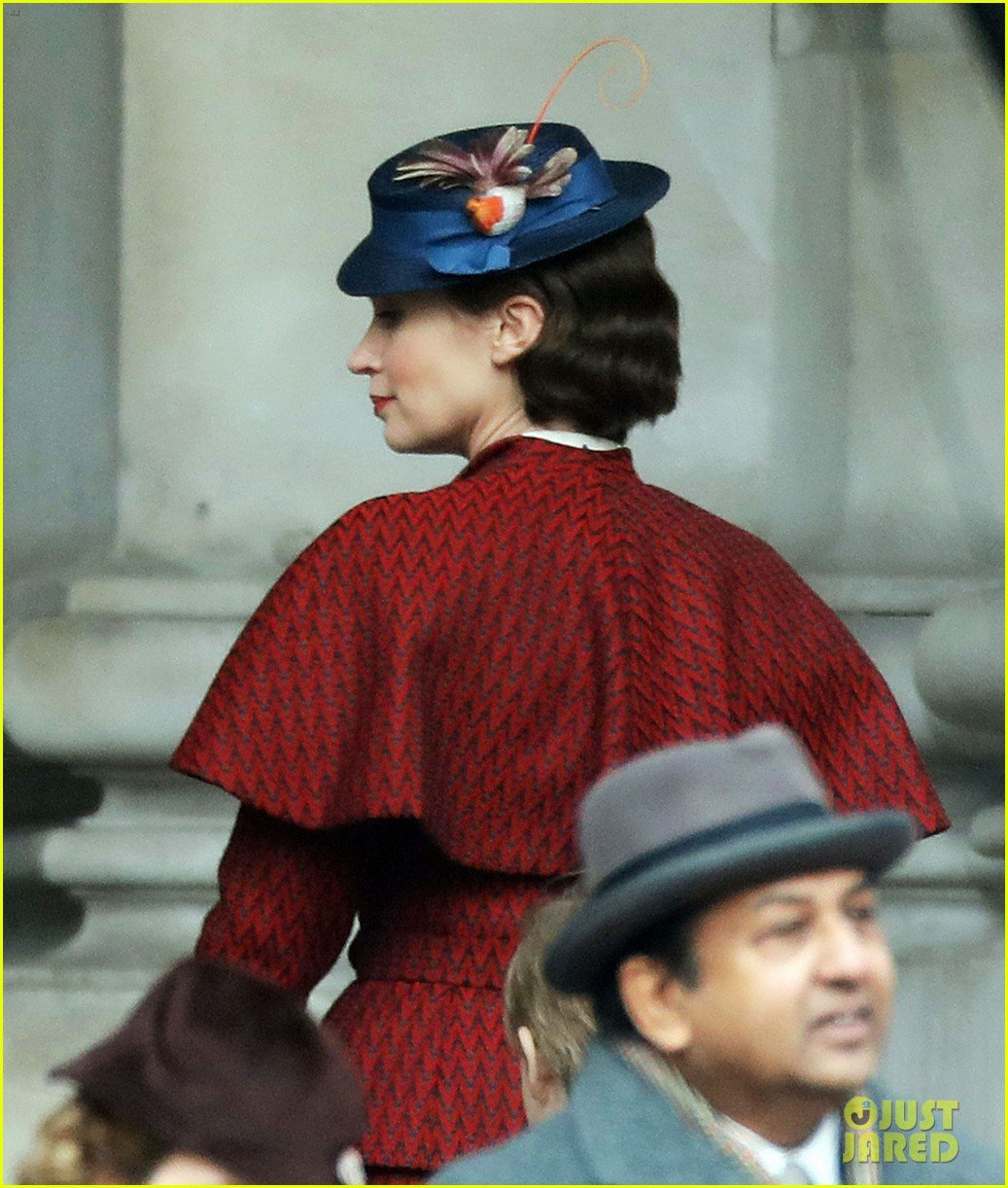
The enchanting world of "Mary Poppins," a film synonymous with Edwardian London, wasn't actually brought to life amidst the bustling streets of England's capital. In a surprising twist for many fans, this beloved Disney classic, known for its iconic chimney sweeps and magical nannies, was entirely filmed thousands of miles away at the Walt Disney Studios in Burbank, California. This extraordinary feat of filmmaking innovation and creative ingenuity allowed Disney to craft a fantastical London right in the heart of Hollywood.
At its core, "Mary Poppins" tells the story of the dysfunctional Banks family in 1910 London, whose lives are transformed by the arrival of a practically perfect nanny. From the stern George Banks to the spirited children Jane and Michael, Mary Poppins, played by the incomparable Julie Andrews, introduces a world of magic, laughter, and heartwarming lessons. Alongside her friend Bert (Dick Van Dyke), a jack-of-all-trades, she takes the children on adventures through chalk drawings and tea parties on the ceiling, ultimately helping the family rediscover joy and connection.
Building Edwardian London in Burbank
Walt Disney's ambition for "Mary Poppins" was grand, requiring the creation of an elaborate London cityscape that could seamlessly blend live-action with groundbreaking animation. Rather than transporting cast and crew across the Atlantic, Disney's vision materialized on soundstages. The meticulous recreation of cherry tree lane, the Banks' home, and even the rooftops of London was achieved through massive sets and intricate matte paintings. To truly appreciate the scale and detail involved in this ambitious undertaking, you'll want to explore the specifics of these fabricated environments by delving into Mary Poppins Filming Locations.
The decision to film entirely in Burbank was not merely for convenience; it was a testament to Disney's pioneering spirit in visual effects. The film made extensive use of the sodium vapor process, an innovative technique that allowed for the unparalleled integration of live actors with animated backgrounds and characters. This technological marvel was crucial for scenes like the iconic "Jolly Holiday" sequence, where Mary and Bert frolic with animated penguins. For a deep dive into how these magical moments were engineered, make sure to visit Mary Poppins Special Effects &.
Walt Disney's Decades-Long Vision and Creative Tensions
The journey to bring "Mary Poppins" to the screen was a lengthy and often challenging one for Walt Disney, who pursued the film rights from author P.L. Travers for over two decades. His unwavering determination to adapt the cherished books into a live-action musical was a passion project that defined a significant era of his career. This persistence, combined with a clear creative direction, ultimately shaped the beloved film we know today. To understand the full scope of his long-held dream and how it shaped the project, you can Discover Disneys Poppins vision.
However, this ambitious vision wasn't without its complexities. P.L. Travers, the fiercely protective creator of Mary Poppins, was an unenthusiastic consultant throughout the production. She often disapproved of Disney's adaptations, particularly the musical numbers and the use of animation, feeling they diluted the essence of her character. These creative clashes presented significant hurdles that the production team had to navigate, demonstrating the immense effort behind the film's polished facade. Understanding these creative battles and the ingenuity required to overcome them offers a fascinating look into Mary Poppins Production Challenges.
A Supercalifragilistic Achievement
Released on August 27, 1964, "Mary Poppins" was an instant sensation, captivating audiences and critics alike. It went on to become the highest-grossing film of the year and Disney's most successful film at the time, grossing over $103 million worldwide against a modest budget. Its profound financial success even funded the initial purchase of land for Walt Disney World, forever linking the film to the future of the Disney parks.
The film's accolades were equally impressive, garnering 13 Academy Award nominations—a studio record—and winning five, including Best Actress for Julie Andrews and Best Original Song for "Chim Chim Cher-ee." Beyond the awards, its cultural impact is undeniable, recognized for its historical and aesthetic significance by the U.S. National Film Registry in 2013. Even today, interesting details continue to emerge, such as the film's recent reclassification to a PG rating in the UK due to a discriminatory term used by Admiral Boom. For a collection of fascinating trivia and unexpected insights that shed light on its lasting legacy, be sure to Uncover Mary Poppins hidden facts.
The magic of "Mary Poppins" extends beyond its original run, inspiring subsequent works like the biographical drama "Saving Mr. Banks" (2013), which chronicles Walt Disney's pursuit of the film rights, and the enchanting sequel "Mary Poppins Returns" (2018). While P.L. Travers's stipulations prevented direct involvement from the original film's production in stage adaptations, the enduring power of her stories, combined with Disney's pioneering filmmaking, ensures that "Mary Poppins" remains a timeless masterpiece.
The story of "Mary Poppins" filming is a testament to the power of imagination and innovation. It reminds us that magic isn't always found where you expect it, but often created with vision, determination, and a healthy dose of movie wizardry. As we continue to celebrate this "crowning achievement" in Walt Disney's legacy, the original film's ability to transport us to a whimsical London, crafted entirely in Burbank, will forever be a delightful secret behind its extraordinary charm.
Panduan Terkait
Jangan lewatkan panduan mendalam berikut: