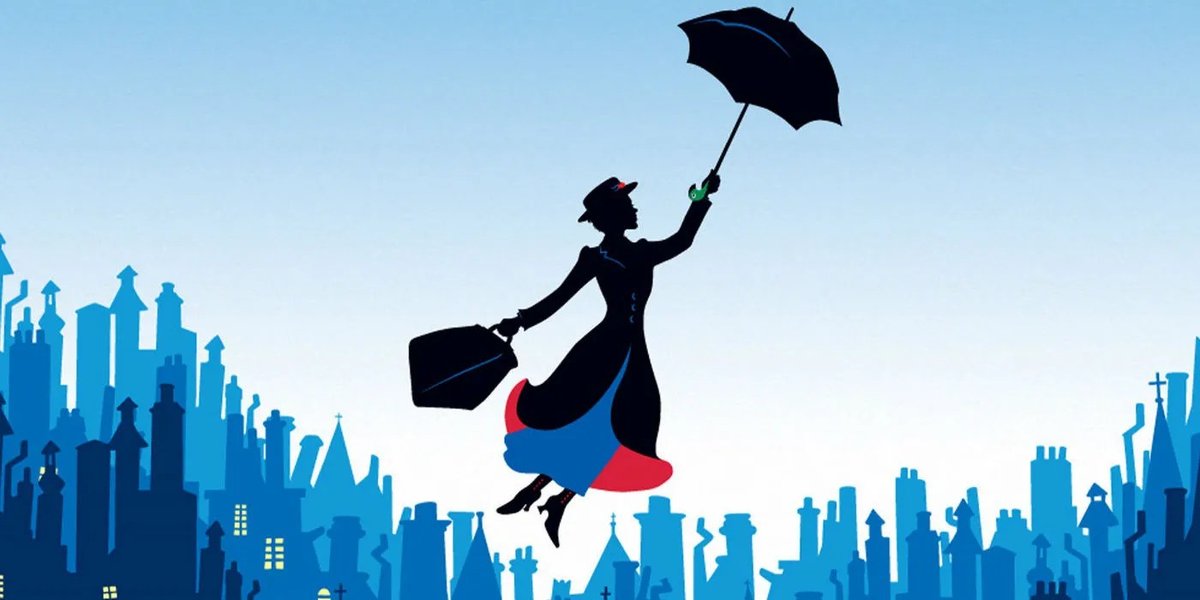
When we talk about cinema that truly captured the imagination, Mary Poppins isn't just on the list; it practically invented its own category. More than just a film, it's a cultural touchstone, a practically perfect blend of live-action and animation that enchanted audiences worldwide. But behind the spoonfuls of sugar and supercalifragilisticexpialidocious songs lies a fascinating and often challenging journey of creation. Understanding the Mary Poppins Filming Timeline & Development isn't just a peek behind the curtain; it’s an appreciation for the sheer willpower, innovative spirit, and artistic collaboration that brought this masterpiece to life.
It wasn't a quick sprint, but a marathon spanning decades, marked by a determined visionary, a reluctant author, and a team of artists pushing the boundaries of filmmaking.
At a Glance: The Making of a "Practically Perfect" Film
- Long Development Cycle: Walt Disney pursued the rights to P.L. Travers' books for over two decades before securing them.
- One Location, Many Worlds: The entire film was shot at the Walt Disney Studios in Burbank, California, transforming soundstages into Edwardian London.
- Pioneering Blends: Groundbreaking integration of live-action performances with traditional animation, setting a new industry standard.
- Iconic Cast: Julie Andrews and Dick Van Dyke, among others, delivered career-defining performances.
- Musical Heart: The Sherman Brothers composed a legendary soundtrack that remains beloved decades later.
- Release Year: Premiered in 1964, becoming an instant classic and critical darling.
The Unlikely Courtship: Walt Disney's Pursuit of Poppins
The story of Mary Poppins on screen begins not with a script, but with a promise Walt Disney made to his daughters. Having fallen in love with P.L. Travers' "Mary Poppins" books, they implored their father to turn them into a movie. This seemingly simple request set off a persistent, decades-long quest that forms the foundational layer of the Mary Poppins Filming Timeline & Development.
Beginning in the late 1930s and continuing through the 1940s and 1950s, Disney repeatedly sought the film rights from Pamela Lyndon Travers, the enigmatic British author. Travers, fiercely protective of her creation, was deeply skeptical of Hollywood, particularly Disney's penchant for animation and musical numbers, fearing it would dilute the darker, more mysterious essence of her beloved nanny. Her initial rejections were firm, her resolve unyielding.
It wasn't until the early 1960s, after a concerted effort and an agreement that granted her significant script approval rights (though perhaps less than she imagined), that Travers finally relented. This hard-won victory opened the door for pre-production to officially begin, marking a pivotal turning point after more than twenty years of pursuit.
Crafting the Script: From Page to "Practically Perfect" Narrative
With the rights secured, the real work of adaptation began. The primary challenge was transforming Travers' episodic books, which often featured stand-alone adventures, into a cohesive, flowing cinematic narrative. Screenwriters Bill Walsh and Don DaGradi, under Walt Disney's close supervision, tackled this monumental task.
Their mission was to retain the spirit of Travers' Mary Poppins—her no-nonsense demeanor and underlying magic—while infusing the story with the warmth and musicality Disney envisioned. This often led to creative clashes with Travers, who moved to Los Angeles during the script's development to oversee the process, frequently expressing her disapproval of changes. Yet, it was this friction that, arguably, helped refine the script, forcing the team to constantly justify their choices and ensure the story remained robust.
Key narrative choices included centering the plot around the Banks family's financial struggles and George Banks' character arc, introducing a more prominent role for Bert as a multi-talented observer and friend, and weaving the musical numbers seamlessly into the plot rather than simply as diversions. The Sherman Brothers, Richard and Robert, were brought in early, an unusual step for the time, to compose songs that would actively drive the story and reveal character, ensuring music was an integral part of the narrative fabric from the ground up. This collaborative approach was crucial to the eventual success you can explore further with All about Mary Poppins filming.
Assembling the Perfect Ensemble: Casting the Magic
A film as ambitious as Mary Poppins demanded a stellar cast capable of both dramatic depth and musical brilliance. The casting process, especially for the lead roles, became another cornerstone of the Mary Poppins Filming Timeline & Development.
Mary Poppins: A Star is Born
Walt Disney himself spotted Julie Andrews in her Broadway triumph, Camelot. Despite her lack of film experience and her recent disappointment from being passed over for the film adaptation of My Fair Lady, Walt was convinced she was his Mary Poppins. He promised her she would be a star, a promise he famously kept. Andrews brought an exquisite blend of sternness, charm, and an ethereal quality to the role, coupled with a magnificent singing voice that anchored the film's musicality. Her iconic performance remains synonymous with the character.
Bert: The Versatile Companion
For the role of Bert, the charming street artist, chimney sweep, and general handyman, Walt chose Dick Van Dyke. A popular Broadway and television star, Van Dyke's physical comedy, infectious energy, and stage presence made him an ideal fit. While his Cockney accent became a subject of both affection and comedic criticism over the years, his chemistry with Andrews and his ability to carry multiple song-and-dance numbers were undeniable.
The Banks Family: Grounding the Magic
David Tomlinson brought a perfect blend of stuffiness and underlying vulnerability to George Banks, undergoing a transformative character arc central to the film's emotional core. Glynis Johns, as the suffragette Winifred Banks, offered a spirited and endearing performance. Child actors Karen Dotrice (Jane) and Matthew Garber (Michael) were cast for their natural charm and ability to react authentically to the fantastical events unfolding around them, often requiring extensive green screen work and interactions with invisible animated characters.
Stepping onto Cherry Tree Lane: Filming Commences at Walt Disney Studios
One of the most remarkable facts about the Mary Poppins Filming Timeline & Development is its consolidated production environment. Unlike many large-scale films that utilize diverse locations, Mary Poppins was filmed entirely within the confines of the Walt Disney Studios in Burbank, California. This self-contained approach allowed for unparalleled control over every aspect of the production, from set design to special effects integration.
Soundstages Transformed
The massive soundstages at Burbank became the bustling heart of Edwardian London. Cherry Tree Lane, the iconic street where the Banks family resided, was meticulously constructed indoors, allowing filmmakers complete command over lighting, weather effects, and background integration. The Banks' home, from the chaotic nursery where Mary tidies with a "Spoonful of Sugar" to George's stuffy study, was built with incredible detail, providing a tangible world for the actors to inhabit. Even the grand, imposing bank where George works and Michael's tuppence triggers a run, was an elaborate interior set on a soundstage.
This centralized filming strategy meant that the production team could seamlessly transition between different sets, experiment with camera angles, and execute complex sequences without logistical headaches of external shoots. It was a testament to the comprehensive capabilities of the Disney studio system at the time.
Backlots and Beyond
While the primary action unfolded on soundstages, Disney's backlot facilities were strategically employed for wider shots and to add depth to the London cityscape. Through clever set dressing, matte paintings, and forced perspective techniques, these areas were transformed into various London districts, further extending the illusion of the film's setting. The ability to control every aspect, from the cobblestone streets to the rooftops Bert traverses as a chimney sweep, was critical to achieving the film's distinctive look and feel.
This intensive, studio-bound production schedule for Mary Poppins began in mid-1963 and continued well into early 1964, demanding long hours and meticulous coordination from every department involved.
The Art of Illusion: Blending Live-Action and Animation
The true magic of Mary Poppins wasn't just in its story or songs, but in its revolutionary visual effects, pioneering a seamless integration of live-action and traditional animation that redefined filmmaking possibilities. This innovative approach is a highlight of the Mary Poppins Filming Timeline & Development.
Ub Iwerks' Genius and Disney's Innovation
At the forefront of these technical innovations was Ub Iwerks, a legendary animator and special technical consultant for Disney. Having animated with Walt Disney since the early days of Mickey Mouse, Iwerks brought decades of experience and an inventive spirit to the project, supervising the animation and composite shots that would make the film truly unique. His team pushed the boundaries of multi-plane camera techniques, rotoscoping, and sodium vapor process (a sophisticated form of chroma keying) to achieve the film's groundbreaking visual feats.
The Jolly Holiday Sequence: A Breakthrough
The most famous example of this blend is the "Jolly Holiday" sequence, where Mary Poppins, Bert, and the children jump into one of Bert's chalk pavement drawings. In this vibrant, animated world, they interact with dancing penguins, animated carousel horses, and other cartoon characters. This required precise choreography from the live-action actors, who often had to perform to pre-recorded animation or with invisible counterparts, all while being filmed against a blank background that would later be filled with hand-drawn animation. The technical complexity of aligning live actors with animated elements in a believable, charming way was unprecedented for its time.
Practical Effects: Floating Uncles and Flying Nannies
Beyond animation, Mary Poppins employed a host of ingenious practical effects:
- Mary's Flight: Julie Andrews was often suspended by hidden wires for her graceful descents and ascents, masterfully blended with matte paintings to create the illusion of soaring over London.
- Uncle Albert's Tea Party: The scene where Uncle Albert (played by Ed Wynn) floats to the ceiling from laughter was achieved with a combination of clever set design, hidden platforms, and camera tricks, creating the illusion of weightlessness. The furniture was bolted down, and the actors were moved on and off various platforms.
- Chimney Sweep Antics: The elaborate "Step in Time" sequence, featuring Bert and dozens of chimney sweeps dancing across rooftops, combined elaborate set pieces, carefully controlled smoke effects, and intricate choreography.
These diverse techniques, supervised by Iwerks and the special effects team, ensured that the film's magic felt truly tangible, allowing audiences to suspend disbelief and fully immerse themselves in Mary Poppins' extraordinary world.
The Sherman Brothers' Masterpiece: Songs That Stirred the Soul
Integral to the "Mary Poppins" experience is its unforgettable score, a central pillar in the Mary Poppins Filming Timeline & Development. Richard M. Sherman and Robert B. Sherman, known affectionately as the Sherman Brothers, composed some of their most iconic work for this film. Their songs didn't just entertain; they advanced the plot, revealed character, and injected the film with its distinctive emotional resonance.
Walt Disney famously gave them a direct brief: "No sad songs for Mary." However, he made an exception for "Feed the Birds," which he considered his favorite, understanding its profound emotional core and its role in reflecting Mary's empathetic nature.
Songs like "A Spoonful of Sugar" offered whimsical life lessons, while "Supercalifragilisticexpialidocious" became a linguistic marvel, encapsulating the film's joyous spirit. "Chim Chim Cher-ee" provided a poignant, grounding melody for Bert's character, eventually earning an Academy Award. The brothers worked tirelessly, often directly on set and alongside the screenwriters, ensuring the music and lyrics were perfectly integrated into the narrative flow, a key factor in the film's enduring appeal.
Behind the Camera: Visionary Direction and Collaborative Spirit
The success of Mary Poppins was also a testament to the visionary leadership of its director, Robert Stevenson, and the collaborative environment fostered by Walt Disney himself. Stevenson, a veteran director known for his steady hand and ability to manage complex productions, skillfully orchestrated the myriad elements of the film.
He navigated the intricate choreography of musical numbers, the delicate balance between live-action and animation, and the nuanced performances required from his cast. Walt Disney, ever the hands-on producer, remained deeply involved, attending dailies, offering creative input, and often mediating between different departments to ensure a cohesive vision. This collaborative spirit, where animators, special effects artists, musicians, and actors worked in concert, was a hallmark of Disney productions during this golden era.
The production demanded immense dedication. Actors rehearsed for weeks, particularly for the elaborate dance numbers. The animation team faced the daunting task of creating countless frames of hand-drawn animation to blend seamlessly with the live footage. It was a daily exercise in problem-solving and artistic precision, ensuring that every detail contributed to the film's overall charm and magic.
Post-Production Polish: Bringing it All Together
Once principal photography wrapped in early 1964, the extensive post-production phase began. This was where all the disparate elements—live-action footage, hand-drawn animation cells, musical recordings, and practical effects—were meticulously woven together into the final cinematic tapestry.
Editors like Cotton Warburton faced the colossal task of cutting together sequences that seamlessly integrated actors with their animated co-stars, often requiring precise timing down to the frame. Sound designers worked to create an immersive auditory experience, from the chirping of animated birds to the whirring of Mary's umbrella. The musical score was mixed with the dialogue and sound effects, ensuring that the Sherman Brothers' compositions soared without overpowering the narrative.
The color grading and visual effects refinement were also crucial. Each animated sequence had to be perfectly color-matched and blended with the live-action plates, making the transitions appear effortless. This painstaking process ensured that the final film delivered on its promise of a "practically perfect" visual and auditory experience.
Legacy and Impact: A Timeless Classic is Born
Mary Poppins premiered on August 27, 1964, to immediate critical acclaim and commercial success. It became the highest-grossing film of that year and went on to win five Academy Awards, including Best Actress for Julie Andrews, Best Original Song for "Chim Chim Cher-ee," and Best Original Score.
Its innovative blend of live-action and animation set new technical standards for the industry, inspiring future filmmakers to explore similar hybrid approaches. Beyond the technical achievements, the film's enduring charm, memorable songs, and heartwarming story about family connection have cemented its place as a timeless classic. It continues to enchant new generations, proving that the magic created during its demanding Mary Poppins Filming Timeline & Development remains as potent today as it was over half a century ago. If you’re curious about more details on the production, remember to check All about Mary Poppins filming.
Key Milestones in the "Mary Poppins" Filming & Development Journey
To truly appreciate the scope of this project, let's recap the pivotal moments in its journey to the big screen:
- Late 1930s – Early 1960s: Walt Disney begins and continues his persistent efforts to acquire the film rights from author P.L. Travers. This two-decade-plus pursuit lays the essential groundwork.
- Early 1960s: Rights are finally secured, albeit with P.L. Travers’ significant (and often contentious) input into script development.
- 1961-1962: Early scriptwriting and musical development begin, with the Sherman Brothers brought in to integrate songs directly into the narrative structure.
- 1963 (Early): Extensive pre-production, including detailed set designs, costume creation, and storyboard development for live-action and animated sequences.
- 1963 (Mid): Casting is finalized, with Julie Andrews and Dick Van Dyke secured for the lead roles. Rehearsals for musical and dance numbers begin in earnest.
- Mid-1963 – Early 1964: Principal photography takes place entirely at Walt Disney Studios in Burbank, California. Soundstages are transformed into Cherry Tree Lane, the Banks' home, and other iconic locations. This period involved complex live-action filming, often requiring actors to interact with unseen animated elements.
- Early 1964 – Mid-1964: Post-production intensifies. This phase is crucial for compositing live-action footage with hand-drawn animation (supervised by Ub Iwerks), extensive editing, sound design, and scoring.
- August 27, 1964: Mary Poppins premieres, beginning its legendary run as a cinematic masterpiece.
Beyond the Screen: Fascinating Facts from Production
The making of Mary Poppins is filled with intriguing anecdotes that shed further light on its development:
- Travers' Presence: P.L. Travers was indeed on set during parts of the production. Her intense involvement, often bordering on interference, famously frustrated the creative team but also ensured a fidelity to her character that, in retrospect, contributed to the film's depth. This dynamic was later dramatized in the film Saving Mr. Banks.
- "Feed the Birds": This poignant ballad was Walt Disney's favorite song from the film. He would often ask the Sherman Brothers to play it for him when he needed a moment of reflection.
- Dick Van Dyke's Dual Role: Beyond Bert, Dick Van Dyke also played the incredibly aged bank director, Mr. Dawes Sr., under heavy makeup. He took no credit for the role, performing it out of sheer enjoyment.
- The Power of the Mouse: The film's unprecedented success bolstered Disney's reputation not just in animation, but as a major player in live-action film production, paving the way for future ambitious projects.
Common Questions About Mary Poppins' Filming
Where was Mary Poppins filmed?
The entire film Mary Poppins (1964) was filmed at the Walt Disney Studios in Burbank, California. No external on-location shooting took place in London or elsewhere. The production team meticulously recreated Edwardian London, including Cherry Tree Lane and the bank interiors, on soundstages and utilized the studio's backlots for various scenes, blending them with matte paintings and special effects to expand the perceived scale.
How long did it take to make Mary Poppins?
While principal photography took roughly nine months (mid-1963 to early 1964), the development of Mary Poppins was a much longer process. Walt Disney pursued the film rights for over 20 years before P.L. Travers finally agreed in the early 1960s. From securing the rights to the film's release, the intensive pre-production, scriptwriting, song development, filming, and post-production spanned approximately three to four years.
Was Mary Poppins filmed with real animals?
For the fantastical sequences, such as the "Jolly Holiday" where Mary Poppins and Bert interact with dancing penguins, traditional hand-drawn animation was used. The penguins, carousel horses, and other unique animals were entirely animated and composited with the live-action footage through pioneering special effects techniques. Any brief appearances of common animals, like horses or dogs, would have involved trained animals on set.
How did they achieve the floating scenes with Uncle Albert?
The memorable scene where Uncle Albert floats to the ceiling due to laughter was achieved using a combination of clever set design, practical effects, and camera trickery. Ed Wynn and other actors were positioned on hidden platforms, and parts of the set were designed to be suspended or rotated to create the illusion of weightlessness. Camera angles and cuts further enhanced this effect, allowing the magic to appear seamless on screen.
Your Guide to Exploring the Magic Further
The Mary Poppins Filming Timeline & Development is a story of vision, persistence, and pioneering creativity. It's a testament to what a dedicated team can achieve when pushing the boundaries of art and technology. The next time you watch Mary Poppins, you'll likely appreciate it with a new depth, understanding the incredible journey it took to bring that spoonful of sugar to the screen.
We encourage you to revisit this classic, perhaps with an eye for the intricate details of the sets, the seamless blend of live-action and animation, or the carefully crafted performances. Consider exploring documentaries about the making of the film or reading books on Disney's golden age of cinema. You'll find that the magic of Mary Poppins extends far beyond the final cut, residing deeply in its extraordinary creation story. And for even more details, dive into All about Mary Poppins filming to satisfy your curiosity.