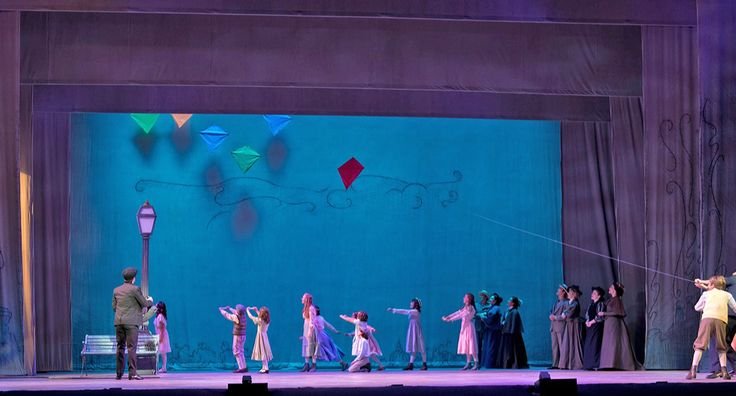
Welcome to the enchanting world of Cherry Tree Lane, a place where magic isn't just a story – it's a meticulously crafted reality. When we talk about bringing the whimsical narrative of Mary Poppins to life, it's impossible to overstate the pivotal role of Mary Poppins Set Design & Art Direction. Beyond merely painting backdrops, the art of staging this beloved tale involves an intricate dance of engineering, illusion, and storytelling, transforming static structures into dynamic characters that breathe alongside the actors. It’s about creating environments that don’t just host the magic but are the magic, from a collapsing kitchen to a chimney that doubles as a portal to the stars.
At a Glance: Crafting the World of Mary Poppins
- Architectural Storytelling: Sets aren't just scenery; they define character and narrative, particularly the Banks' iconic home.
- The Power of Transformation: Expect multi-functional, rotating, and collapsible sets that enable seamless, magical transitions.
- Engineering Wonders: Hidden mechanisms and robust structures are key to illusions like flying, collapsing furniture, and whisking characters up chimneys.
- Visual Evolution: Watch for dynamic shifts in color and tone, particularly in the Jolly Holiday park scene, reflecting changes in perspective.
- Audience Immersion: Design choices actively pull the audience into Mary Poppins' extraordinary world, blurring the lines between stage and imagination.
Beyond the Book: Why Set Design is Mary Poppins' Unsung Hero
For any theatrical production, the set design and art direction lay the foundation for the entire world the audience experiences. But for a show as fundamentally magical as Mary Poppins, this foundation isn't just supportive—it's transformative. The challenge isn't merely to depict London in 1910, but to inject it with the extraordinary, making the impossible seem utterly plausible. It’s about making us believe a spoonful of sugar can mend anything, and that a nanny can literally fly. This demands a scenic vocabulary that speaks volumes, visually guiding the audience through moments of whimsy, tension, and pure joy.
Unlike the expansive freedom of a film set, where different locations might involve entirely separate shoots – for instance, pondering where Mary Poppins was filmed reveals a blend of soundstages and meticulous location scouting – the stage version requires a different kind of ingenuity. Everything must happen within a confined space, often in plain sight, demanding a level of mechanical precision and artistic cohesion that is truly breathtaking.
The Banks' Home: A Character in Itself
At the heart of Mary Poppins lies No. 17 Cherry Tree Lane, the Banks' residence. This isn't just a house; it’s a living, breathing entity that reflects the family's changing fortunes and emotional landscape. The set design for the Banks' home had to embody this, providing both a grand, imposing structure and a canvas for disarray and eventual warmth.
Grand Scale, Intimate Details: The Two-Story Interior
The central challenge for the Banks' house interior was its sheer scale and constant presence. Imagine a colossal, two-story structure, approximately 45 feet wide, designed to remain upstage throughout the entire show. This isn't just a backdrop; it's a multi-functional architectural marvel.
This vast structure is ingeniously divided into three distinct 15-foot wide sections:
- George Banks' Study: The domain of Mr. Banks, complete with a desk, fireplace, and a study door. This space isn't just for quiet contemplation; it’s where an advertisement gets sucked up the chimney, where a family heirloom vase might reside, and a rubbish bin for discarded dreams.
- The Grand Entryway: Serving as the central hub, featuring an umbrella stand, a coat tree, and the iconic front door. This is the gateway to Cherry Tree Lane and the first point of contact with Mary Poppins.
- The Staircase Leading to the Second Floor: Not just a means to an end, this staircase is an essential element for entrances, exits, and visual storytelling, connecting the different family spaces.
This permanent, expansive structure ensures a consistent sense of place, allowing the audience to feel truly immersed in the Banks' domestic life, even as other more dynamic sets slide in front of it.
From Street Views to Living Rooms: The Exterior Transition
Before we even step inside, the exterior of No. 17 Cherry Tree Lane sets the scene for London in 1910. The design utilizes a rented SCRIM backdrop to depict the façade of the Banks' home. A scrim is a marvel of theatrical textiles; when lit from the front, it appears opaque, showing a solid image, but when lit from behind, it becomes translucent, revealing elements behind it. This allows for subtle magical reveals or changes in atmosphere.
For the bustling street scenes, featuring characters like Admiral Boom, Miss Lark, and Bert, a pit extension is installed. This extends the playing area forward into what would typically be the orchestra pit, bringing the action closer to the audience and creating a more expansive streetscape. This blend of simple yet effective backdrops and expanded playing areas grounds the audience firmly in the world of Cherry Tree Lane before the real magic begins.
The Nursery: A Canvas for Childhood Imagination (and Adventure)
Perhaps no space in the Banks' home is more symbolic of transformation than the nursery. It's a place of play, discipline, and ultimately, flight. The set design for the nursery had to accommodate immense practical and magical demands, all while maintaining the innocence of a child's room.
The solution? A brilliant, two-sided rotating set piece.
- Nursery Interior: One side meticulously crafts the nursery itself, featuring essential elements like a toy box, beds, pulsing lights, and wall sconces. Crucially, this side must facilitate Mary Poppins' famous "bottomless bag" trick, with mechanisms to pull items like a coat rack, mirror, and telescope from seemingly nowhere. A large dollhouse is also integrated, allowing toys to magically exit and life-sized toys to enter, blurring the lines between play and reality.
- Rooftop Slope and Rooftop: The other side of this rotating marvel depicts the roof slope and the full rooftop. This ingenious design allows for a nearly instantaneous transition from the cozy nursery to the adventurous rooftops of London.
The Chimney: A Portal to the Sky
The nursery set isn't just about rotation; it's about elevation. A critical requirement is a mechanism to whisk the children and Mary Poppins up the chimney and onto the roof. This isn't a simple disappearance; it's a visible, thrilling ascent. Actors must move seamlessly from inside the chimney structure to above the nursery on the roof.
Furthermore, the design ensures that characters and family members remain visible through a nursery window from the roof-side, maintaining connection between the ground-bound and the airborne. Later, for Bert's iconic chimney sweep scene (Scene 11), the set must clearly reveal him on the chimney and provide Mary Poppins easy access to the roof – whether via the chimney, a door/balcony, or a climbing path. And for the grand finale of Act I, the roof must be robust enough to support significant weight and allow Mary to truly fly from it, a moment of pure theatrical wonder. The fact that this entire, complex piece fits within the wings and between the second set of legs, with crew members able to rotate it from inside, speaks volumes about the masterful planning involved.
Magical Transformations: The Park and the Kitchen
The stage production of Mary Poppins doesn't shy away from magic; it leans into it, often using set design as the primary vehicle for illusion.
Jolly Holiday: From Monochrome to Technicolor
The "Jolly Holiday" sequence in the park is a prime example of the set's transformative power. It begins in a muted, gray London, reflecting the drabness of the Banks' lives, and explodes into vibrant color as Mary Poppins brings joy to the park.
The set design accommodates this with:
- Rented Backdrop: Providing a versatile base for the park scenery.
- Park Walls and Gates: Existing park walls are reconfigured to create an entrance, potentially augmented with additional walls or pillars, and a gate or railing.
- Statues: A central statue of a boy with a dolphin on a plinth, alongside other park statues (like Neleus or Queen Victoria), anchors the scene.
- Color Transition Mechanism: The ultimate magic trick. Both the set and costumes must transition from gray to full color. This involves clever lighting, painted elements that reveal color under specific lights, and potentially changing or revealing colored overlays.
- Tea Party Area: A designated space for the delightful tea party.
- Rain/Pouring Effects: The scene also requires effects for rain, and the ability to "add and drain" color, perhaps through dynamic lighting or even physical elements like colored streamers that disappear.
The challenge here is not just to show color, but to make it appear, a visual metaphor for Mary Poppins' influence.
The Magic Kitchen: Chaos and Restoration
The Banks' kitchen in Scenes 5-6 is another highlight of theatrical ingenuity, showcasing destruction and instantaneous repair.
- "Magic" Collapsing Set: This isn't just a kitchen; it's a marvel of engineering designed to be destroyed by Robertson Ay's clumsiness and magically restored by Mary Poppins. This involves a collapsing table, shelves, and other parts that can fall apart on cue and then be quickly reset or revealed as fixed.
- Basement Aesthetic: Envisioned as a basement kitchen, its design features pipes as a main element, adding a touch of industrial realism and character. Potential stairs or landing stairs lead down from the main house, emphasizing its lower-level location.
- Key Elements: A main wall unit incorporates an inset for a stove or counter. The SL (Stage Left) wall unit features a "basement" window, through which a small bush is visible for a bird – a nod to the beloved robins of the story. Other set pieces like tables play in front of these walls, allowing for dynamic arrangement and interaction.
The kitchen set is a testament to how practical stagecraft can create illusions that feel genuinely magical, prompting gasps from the audience.
Expanding the World: From Banks to Beyond
While the Banks' home is central, Mary Poppins' adventures take us across London, each location requiring its own unique visual signature.
The Busy Bank and Austere Cathedral Steps
- The Bank (Scene 7): George Banks' workplace needs to convey a sense of formal, if somewhat stifling, authority. A rented backdrop provides the general atmosphere, while eight rolling clerk/teller windows create the bustling, impersonal environment of a financial institution. These movable units allow for dynamic blocking and quick scene changes.
- Cathedral Steps (Scene 8): This scene calls for an austere, columned facade, reminiscent of St. Paul’s Cathedral, complete with steps and possibly saints. The plan here is still "To Be Determined," highlighting the ongoing creative process and the potential for a new, impactful set piece to emerge. This might involve modular units that can be quickly assembled or revealed.
Mrs. Corry's Talking Shop: A Whimsical Revelation
Scene 9 brings us to Mrs. Corry's Talking Shop, a place of delightful oddities and a celebration of words. The design here perfectly captures its magical, pop-up nature.
- Re-configured Park Walls: The existing park walls from earlier scenes are ingeniously re-configured to create the initial appearance of the shop, demonstrating resourcefulness and multi-functionality in set design.
- Dedicated "Talking Shop" Counter: A custom-built counter for Mrs. Corry is essential, often designed with a whimsical look, featuring playful visual elements, shapes, and colors.
- Glow-in-the-Dark Letters: Tall brick wall units from the park could turn and open, revealing cabinet-like interiors full of glowing letters. This magical reveal visually represents the letters being plucked from the air to form words. Another consideration is a roll-on unit with many drawers, perfect for a shop that sells words, gingerbread, and magic. This blend of existing elements and dedicated, imaginative pieces creates a truly memorable and charming scene.
Act II: Dancing on Rooftops and Stepping Through Time
Act II continues the journey, deepening the magic and expanding the scale, culminating in some of the show's most iconic visual moments.
Returning to the Park and the Night Nursey
- Park Revisited (Scenes 2-4): Simplicity reigns here, with a street lamp, a bench, and two park wall units downstage. The lamp and bench are rented pieces, illustrating how combining custom builds with rented elements can achieve efficiency and impact. This sparser setting allows the focus to shift to character interactions.
- Nighttime Nursery (Scene 7): The nursery returns, now set at night, reinforcing its role as a space for magical activity as the children are once again whisked up the chimney.
Rooftops and "Step in Time": A Choreographed Spectacle
The "Step in Time" sequence is an undeniable showstopper, demanding a dynamic and robust set. This is where the rooftop element of the rotating nursery set is fully unleashed, combined with additional, specially designed pieces.
- Rented Rooftops Backdrop: A rented backdrop establishes the expansive skyline of London rooftops under a starlit sky, providing the atmospheric base.
- Additional Rooftop Pieces: Crucially, additional rooftop pieces are built to perfectly match the backdrop's aesthetic. These aren't just decorative; they are engineered for performance, designed for actors to dance on and even slide down, requiring sturdy construction and appropriate safety measures.
- Multi-Level Dancing: As the nursery roof moves upstage, smaller chimney and rooftop pieces are strategically brought on stage. These pieces create various levels and platforms, allowing for complex choreography and impressive visual formations with the chimney sweeps.
The seamless transition from the parlor, sweeping through the nursery down into the parlor to gather Mrs. Brill and Robertson Ay, is a remarkable feat of stage mechanics, creating a truly cinematic moment that belies the constraints of live theater. It’s an example of how Mary Poppins Set Design & Art Direction choreographs not just actors, but the very environment around them, making the impossible a tangible, breathtaking reality.
The Art of Art Direction: Beyond the Blueprint
While set design focuses on the physical structures, art direction encompasses the overarching visual aesthetic – the colors, textures, props, and overall mood. In Mary Poppins, this means consistently reinforcing the journey from a drab, orderly world to one infused with vibrant color and playful chaos.
Color Palettes and Emotional Arcs
The art direction uses color as a powerful emotional tool. The initial scenes in Cherry Tree Lane and the Banks' home often feature muted tones, grays, and practical browns, reflecting George Banks' rigid worldview. As Mary Poppins enters, bursts of color begin to appear, culminating in the "Jolly Holiday" sequence's explosion of primary hues. This intentional use of color mirrors the emotional development of the characters, particularly the children and the Banks parents. Even the whimsy of Mrs. Corry's shop, with its "playful visual elements in its shape and colors," is a deliberate artistic choice to signal a shift in atmosphere.
Props as Storytellers
Every prop, from the umbrella stand in the entryway to the specific design of the "magic" kitchen elements, is chosen not just for its function but for its ability to tell a story. The family heirloom vase in George's study, the specific medicine bottle in the kitchen, or the glowing letters in Mrs. Corry's shop—all contribute to the rich tapestry of the narrative, often enabling the magic itself.
Lighting: The Invisible Hand of Illusion
While not strictly part of the physical set, lighting is an integral component of art direction, especially in a show like Mary Poppins. It sculpts the sets, creates atmosphere, and most importantly, facilitates many of the illusions. The pulsing lights in the nursery, the dramatic shifts from front-lit to back-lit scrims, and the precise cues needed to reveal color in the park scene are all orchestrated through expert lighting design. It's the invisible hand that makes the magic truly pop.
Common Questions About Mary Poppins Stage Design
How do they make Mary Poppins fly on stage?
Mary Poppins' flight is typically achieved through a system of automation and rigging, often involving a harness worn by the actress and a series of wires and counterweights. These systems are carefully hidden within the set and wings, operated by trained technicians. The roof set piece, in particular, is designed to support the weight and mechanics required for her iconic departure.
How are the quick scene changes managed?
Quick scene changes are a hallmark of live theater and rely on several techniques:
- Automated Systems: Many large set pieces, like the rotating nursery, are on automated tracks or turntables.
- Rolling Units: Smaller sets (like the bank teller windows or Mrs. Corry's counter) are built on wheels, allowing stagehands to quickly roll them into place.
- Telescoping/Folding Sets: Elements like the collapsing kitchen table are designed to quickly break apart and reassemble.
- Multi-functional Sets: Using the same set pieces in different configurations (like the park walls becoming Mrs. Corry's shop) minimizes the need to bring on entirely new units.
- Strategic Lighting: Blackouts or changes in lighting can mask transitions, allowing crew members to move sets in the dark.
Is the stage design for the musical different from the movie?
Absolutely. While both aim to capture the spirit of P.L. Travers' books and the beloved Disney film, the constraints and capabilities of live theatre demand entirely different approaches. The stage production relies on physical, tangible illusions and clever mechanics, whereas film can achieve magic through special effects, editing, and diverse locations. The stage version's sets are often multi-functional, modular, and designed for visible, seamless transitions, a unique challenge that film doesn't share.
Bringing the Magic Home: The Lasting Impact of Visionary Design
The triumph of Mary Poppins Set Design & Art Direction lies not just in its individual elements, but in its cohesive vision. From the imposing yet adaptable Banks' home to the magical, rotating nursery, and the transformative park, every design choice serves the story and amplifies the wonder. It's a masterclass in theatrical engineering and artistic imagination, ensuring that audiences are not just observers, but active participants in the magic.
As you consider the artistry behind beloved theatrical productions, remember that the sets are more than just decoration; they are the silent storytellers, the illusionists, and the very foundation upon which unforgettable moments are built. They allow us to suspend disbelief and, for a few hours, believe in the extraordinary, proving that even the most fantastical tales can find their footing on solid ground – or a well-engineered roof.