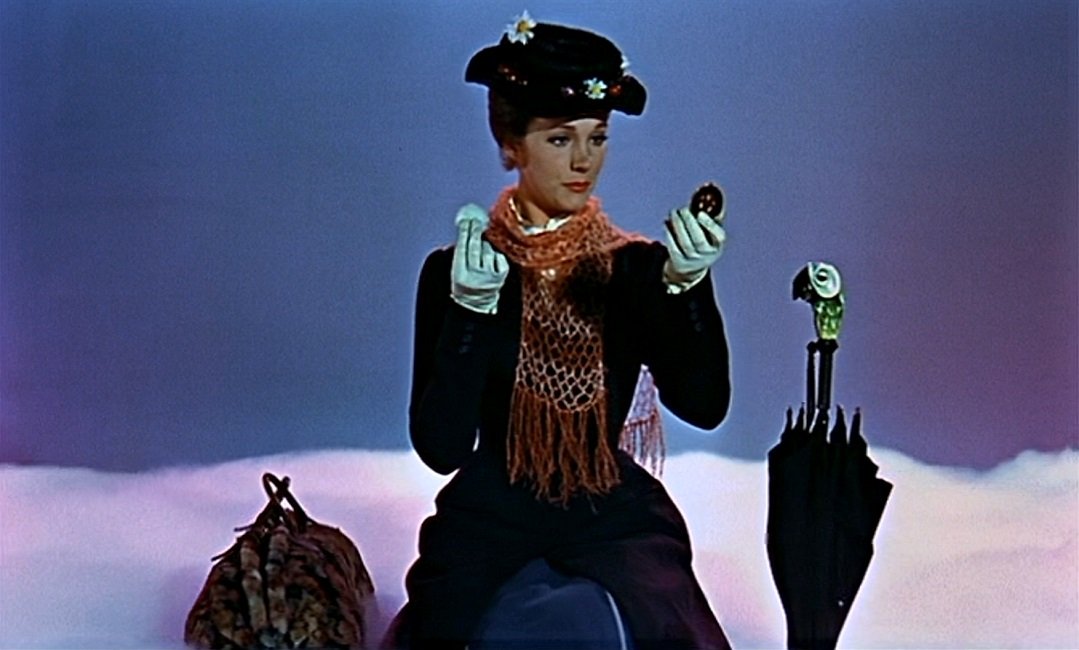
Step into the whimsical world of Mary Poppins, and you're instantly transported to Edwardian London, a vibrant backdrop for flying nannies, dancing penguins, and chimney sweeps defying gravity. What if I told you that for all the film's iconic vistas – the bustling Cherry Tree Lane, the panoramic London rooftops, the lively "Jolly Holiday" park – not a single frame was shot in England? Every breathtaking scene, every magical interaction, was meticulously crafted on soundstages in Burbank, California, a testament to the groundbreaking Mary Poppins special effects and cinematography. This wasn't just filmmaking; it was an audacious act of illusion, blending live-action with animation in ways audiences had never seen before.
At a Glance: The Magic Behind the Lens
- No Location, All Imagination: The entire film was shot on Disney soundstages in Burbank, proving the power of visionary special effects.
- Oscar-Winning Innovation: Mary Poppins earned an Academy Award for Best Special Visual Effects for Peter Ellenshaw, Eustace Lycett, and Hamilton Luske.
- The Sodium Vapor Process: This cutting-edge technique allowed live actors to interact seamlessly with 2D animated characters, famously seen in the "Jolly Holiday" sequence.
- Masterful Matte Paintings: Peter Ellenshaw's hand-painted backdrops on huge sheets of glass created the film's iconic London settings.
- Practical Wonders: From bungee cords making Mary Poppins fly to ingenious on-set physical effects, many illusions were achieved in-camera.
- A Disney Legacy: The film was a culmination of years of Disney's pioneering work in combining live-action and animation.
The Invisible Art: Crafting London Without Leaving California
In an era before sophisticated computer-generated imagery (CGI), creating an entire world from scratch demanded unparalleled artistry and technical ingenuity. Mary Poppins, released in 1964, stands as a monumental achievement, a perfect storm of Disney's decades-long pursuit of photographic and animation excellence. The challenge wasn't just to make a fantastical story believable; it was to build a believable London from the ground up, entirely within the confines of a studio. This audacious goal necessitated a unique collaboration of on-set physical effects, groundbreaking process photography, and meticulous hand-crafted visuals.
Dave Smith, a Disney Legend, accurately described Mary Poppins as "the culmination of years of Disney innovation." The talent pool was largely internal, with Disney staff members handling nearly every aspect of the production, a testament to the studio's deep bench of creative and technical geniuses. This internal synergy allowed for a seamless integration of diverse techniques, all serving the singular vision of bringing P.L. Travers' beloved stories to life.
An Oscar-Winning Symphony: The Visionaries Behind the Illusion
The Academy recognized the sheer scope and success of these efforts, awarding the 1964 Oscar for Best Visual Effects to Peter Ellenshaw, Eustace Lycett, and Hamilton Luske. Each brought a distinct, yet interconnected, expertise to the table, weaving together a tapestry of visual delights that continue to enchant audiences today.
Ellenshaw, a master of cinematic painting, was responsible for the expansive backdrops. Lycett, an expert in optical printing and compositing, handled the complex task of merging various visual elements. Luske, a veteran animation director, was instrumental in guiding the animated sequences and their integration with live-action. Together, they orchestrated a ballet of visual trickery that pushed the boundaries of what was thought possible in filmmaking.
Seamless Integration: The Sodium Vapor Process and Traveling Mattes
One of the most revolutionary techniques employed in Mary Poppins was the sodium vapor process, a sophisticated form of traveling matte compositing. This innovation was central to scenes where live actors had to interact directly with animated characters or complex backgrounds, most famously showcased during the "Jolly Holiday" sequence. Imagine Mary Poppins and Bert dancing and singing with animated penguins – a magical feat achieved with painstaking precision.
How the Sodium Vapor Process Worked: A Technical Marvel
Invented by Petro Vlahos, who, along with Ub Iwerks and Wadsworth E. Pohl, received an Oscar in 1965 for its perfection, the sodium vapor process offered a superior alternative to the blue screen techniques of the time. Here’s a simplified breakdown of its genius:
- Special Screen and Lights: Actors were filmed in front of a white screen, but this screen was specifically lit with powerful sodium vapor lamps. These lamps emit a very narrow wavelength of yellow light, unlike the broader spectrum of light used in typical filming.
- Special Camera: A Technicolor camera was modified with a beam splitter. This allowed it to simultaneously record two distinct images:
- One image, captured through a magenta filter, recorded the full-color scene, with the yellow sodium light essentially filtered out, appearing as a pure black background.
- The second image, captured through a special yellow filter, isolated only the sodium light, effectively creating a high-contrast black and white "matte" of the actors.
- Creating the "Hole": The high-contrast matte film was then used to create a "hole" in the background footage (e.g., the animated park or painted London street).
- Compositing: The live-action footage of the actors was then precisely combined with the background footage, filling the "hole." Because the sodium light provided such a clean separation from the actors, the resulting composite was remarkably seamless, avoiding the "fringing" or "halo" effects common with less precise blue screen methods.
This technique allowed for unparalleled realism in composite shots, making the animated penguins appear as if they were truly sharing the screen with Julie Andrews and Dick Van Dyke. It was a painstaking, frame-by-frame process, but the results speak for themselves: vibrant, believable interactions that cemented the film's place in cinematic history.
Building London on Glass: The Masterful Matte Paintings of Peter Ellenshaw
If the sodium vapor process brought characters together, Peter Ellenshaw’s matte paintings brought entire worlds to life. Ellenshaw’s contribution to Mary Poppins is nothing short of legendary. He was tasked with creating the vast, iconic landscapes of London, from the rooftops traversed by chimney sweeps to the charming street of Cherry Tree Lane, all without ever leaving the studio.
The Art of Deception: What are Matte Paintings?
Matte paintings are meticulously hand-painted backdrops, often executed on large sheets of glass. The artist paints everything that needs to be static—buildings, skies, distant horizons—while leaving a clear area (the "matte") where live-action footage would later be composited.
For Mary Poppins, Ellenshaw's paintings were gargantuan, depicting panoramic views of the city. As Craig Barron, co-author of The Invisible Art: The Legends of Movie Matte Paintings, observed, Ellenshaw’s work belongs to "that unsung craft that’s now virtually disappeared." He almost single-handedly conjured "incredible movie making locations with just the sublime artistry of brush strokes."
Ellenshaw's Brushstrokes: Creating Cherry Tree Lane and Beyond
Imagine the detailed, sprawling view of London from the Banks' rooftop, or the charming, slightly fantastical perspective of Cherry Tree Lane. These weren't elaborate sets spanning acres; they were Ellenshaw's paintings, integrated so seamlessly with smaller, physical sets that audiences remained completely unaware of the illusion.
His work allowed the filmmakers to depict grandeur and scale that would have been impossible or prohibitively expensive to build physically. It's truly "the ‘art’ in movies that generations of audiences have appreciated unawares, thanks to the skill of this great movie artist." This mastery of visual trickery meant that the magical realism of Mary Poppins could unfold against a backdrop that felt both familiar and wonderfully stylized. It's a key reason why Where Mary Poppins was filmed is such a fascinating question for fans, as the answer points directly to these ingenious visual effects.
Practical Magic: On-Set Effects and Ingenious Rigging
Beyond the intricate optical work and painted backdrops, a significant portion of Mary Poppins' magic came from ingenious practical effects executed right on the soundstage. These in-camera tricks lent a tangible quality to the fantastical elements, grounding them in a believable reality.
The Bungee Cords and Beyond: Making Mary Poppins Fly
How did Mary Poppins gracefully ascend into the sky with her umbrella, or float along the ceiling? The answer lies in carefully concealed rigging and wires. Bungee cords, as simple as they sound, were employed to help characters "soar above London rooftops," providing the necessary support and spring for many of the flying sequences. These were often combined with optical masking to hide the wires, or with clever camera angles and subtle movements to draw the eye away from the rigging.
Other physical effects included:
- Set Pieces: The chimney sweep sequence, with its swirling dust and precarious perches, involved a combination of carefully designed sets and stunt work, enhanced by practical smoke and atmospheric effects.
- Props with a Personality: From the magically unpacking carpet bag to the disappearing reflections in the mirror, many props were designed with hidden mechanisms, operated by puppeteers or crew members just out of frame. These subtle movements added layers of charm and believability to Mary Poppins' powers.
- In-Camera Effects: Simple yet effective techniques like forced perspective, where objects closer to the camera appear larger or smaller to create an illusion of distance or scale, were also employed. The combination of these physical, in-camera effects with the more complex optical composites created a cohesive, magical world.
The Art of Illusion: A Legacy of Live-Action and Animation Fusion
Mary Poppins wasn't just a technical marvel; it was a masterful lesson in how visual effects can serve storytelling. The film's effects never felt gratuitous; instead, they were integral to the narrative, enhancing the wonder and whimsy of Mary Poppins' arrival and departure. This balance between spectacle and storytelling is a hallmark of classic Disney filmmaking.
The success of Mary Poppins cemented Disney's reputation as a pioneer in combining live-action and animation. It provided a roadmap for future productions, demonstrating that with enough ingenuity, complex fantastical elements could be brought to life on screen in a convincing and captivating way. The techniques refined here, particularly in traveling mattes and matte painting, would influence filmmakers for decades, proving that the magic often lies not in what you see, but in what you don't see.
Beyond the Pixels: Why Analog Effects Still Captivate
In an age dominated by sophisticated CGI, it’s worth pausing to appreciate the unique charm and warmth of analog special effects. The hand-painted quality of Ellenshaw’s matte paintings, the subtle imperfections of optical composites, and the tangible presence of practical effects give Mary Poppins a timeless quality.
These techniques required immense human effort, artistic skill, and problem-solving on the fly. There's a certain "soul" to effects crafted with paint, glass, and light that can sometimes feel absent in purely digital creations. The limitations of the technology often spurred greater creativity, forcing artists and technicians to find ingenious workarounds that, ironically, often felt more magical precisely because they were so cleverly executed. The enduring appeal of Mary Poppins underscores that sometimes, the most effective illusions are those born not of infinite processing power, but of boundless imagination.
Frequently Asked Questions About Poppins' Visual Effects
How did Mary Poppins fly?
Mary Poppins' iconic flights were achieved using a combination of practical rigging and optical effects. Julie Andrews, and other actors during flying sequences, were often suspended by wires and bungee cords, carefully hidden from the camera's view or digitally removed during the post-production optical printing process. These physical setups allowed for realistic movement and interaction with props like her umbrella.
How were live actors combined with animation in "Jolly Holiday"?
The seamless integration of live actors with 2D animated characters, most notably in the "Jolly Holiday" sequence, was primarily accomplished using the sodium vapor process. This advanced form of traveling matte technology involved filming actors in front of a screen lit with specific sodium vapor lamps, which allowed for an extremely clean separation of the actors from the background. This clean "matte" was then used to precisely combine the live-action footage with the animated backgrounds and characters, creating the illusion that they were sharing the same space.
Who won the Academy Award for special effects for Mary Poppins?
Mary Poppins won the 1964 Academy Award for Best Special Visual Effects. The award was given to Peter Ellenshaw, Eustace Lycett, and Hamilton Luske, recognizing their collective genius in pioneering and executing the film's groundbreaking visual effects. Separately, in 1965, Petro Vlahos, Ub Iwerks, and Wadsworth E. Pohl received an Oscar for the conception and perfection of techniques for Color Traveling Matte Composite Cinematography, specifically acknowledging the sodium vapor process that was so critical to Mary Poppins.
Was Mary Poppins filmed in London?
No, Mary Poppins was not filmed in London. The entire film, including all the iconic London street scenes, rooftop views, and park sequences, was shot on soundstages in Burbank, California. The illusion of London was meticulously created through a combination of large-scale matte paintings by Peter Ellenshaw, detailed set designs, and innovative process photography that integrated actors into these fabricated environments. This commitment to studio-based filmmaking allowed for complete control over every visual element, contributing significantly to the film's magical atmosphere.
The Enduring Magic: What We Learn from Mary Poppins' VFX
The legacy of Mary Poppins' special effects is a powerful reminder that ingenuity, artistic vision, and collaborative spirit can overcome seemingly impossible technical challenges. This film didn't rely on brute computational power; it thrived on clever problem-solving, meticulous craftsmanship, and an unwavering commitment to bringing a fantastical story to life in the most believable way possible.
For filmmakers, Mary Poppins remains a masterclass in invisible effects – techniques so seamlessly integrated that audiences never question the magic they're witnessing. For audiences, it's a testament to the enduring power of classic filmmaking, proving that true wonder isn't just about what's new, but about what's timeless. Next time you watch Mary Poppins gracefully ascend into the sky or dance with animated penguins, take a moment to appreciate the extraordinary artistry and groundbreaking techniques that made that magic a reality, all without ever stepping foot outside a Burbank soundstage. It’s a practically perfect example of how imagination, not location, creates cinematic history.
Untuk pemahaman lebih lengkap, baca panduan utama kami: Where Mary Poppins was filmed