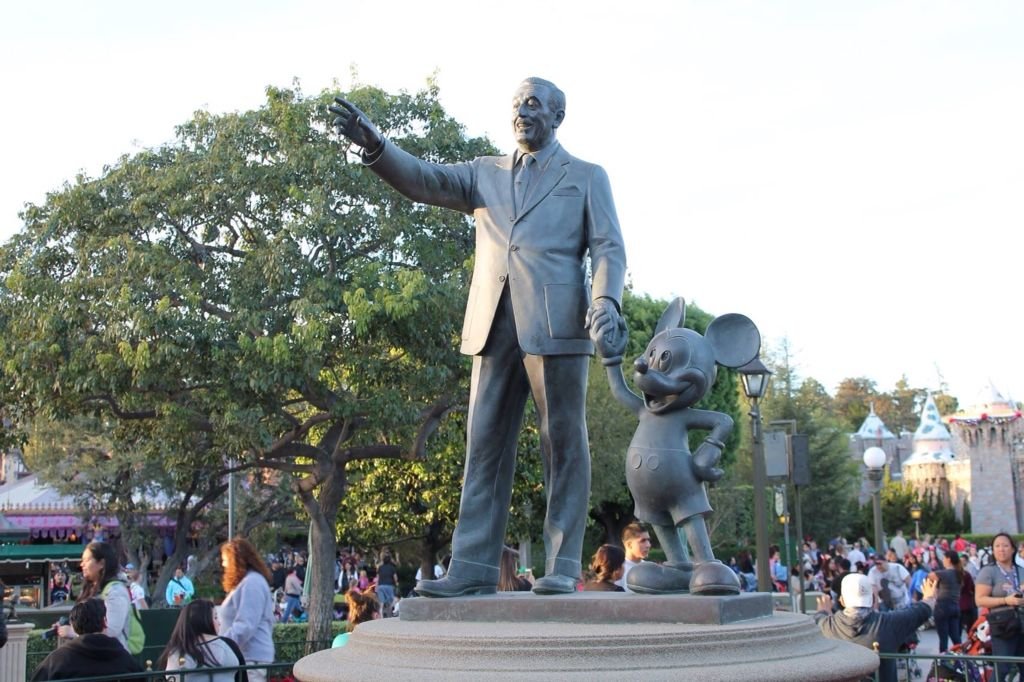
Walt Disney. The name alone conjures images of boundless imagination, animated wonders, and a touch of the extraordinary. But even for a man who built an empire on dreams, bringing Mary Poppins to the screen was a monumental undertaking, a nearly two-decade battle of wills that ultimately cemented Walt Disney's Vision for Mary Poppins as a definitive cinematic classic. It’s a story of perseverance, creative clashes, and the magic that happens when an unwavering vision meets unprecedented ambition.
At a Glance: Walt Disney's Mary Poppins Journey
- A Promise to a Daughter: Walt Disney vowed to adapt Mary Poppins for his daughter in the early 1940s.
- Two Decades of Pursuit: It took nearly 20 years to secure film rights from a highly reluctant P.L. Travers.
- Travers' Deep Skepticism: The author feared Disney would "sentimentalize" her beloved character, only relenting due to financial need.
- Creative Clashes Awaited: Travers served as a consultant, but her stringent views frequently clashed with Disney's creative team, especially over music and animation.
- A Technical Marvel: The 1964 film seamlessly blended live-action and animation, pushing cinematic boundaries.
- Instant Success: Mary Poppins was a critical and commercial triumph, earning numerous awards and becoming Disney's highest-grossing film to date.
- Legacy Beyond Film: Profits from Mary Poppins played a crucial role in funding Walt Disney World, forever changing the Disney landscape.
- Author's Enduring Dislike: Despite its acclaim, P.L. Travers famously disliked the final film, particularly the animated sequences and songs, and never collaborated with Disney again.
The Impossible Dream: Disney's Decades-Long Pursuit
Imagine making a promise to your child that takes nearly 20 years to fulfill. That was Walt Disney's reality when his daughter Diane fell in love with P.L. Travers' 1934 book Mary Poppins. In the early 1940s, Walt pledged to bring the magical nanny to the silver screen, unknowingly embarking on a saga that would test his legendary resolve.
Travers, the book's author, was fiercely protective of her creation. She viewed Mary Poppins not just as a character, but as an extension of her own strict yet tender great-aunt Ellie, affectionately known as Aunt Sass. This formidable woman had stepped in to support Travers' family after her father's death, leaving an indelible mark that inspired the no-nonsense nanny. Travers feared Disney's reputation for whimsical sentimentality would strip Poppins of her essential British sternness and depth. For nearly two decades, she steadfastly refused to sell the film rights, creating a creative standoff that would have deterred lesser men.
But Walt Disney was not easily deterred. His vision for Mary Poppins wasn't just about adapting a book; it was about capturing its spirit of magic and wonder in a way only film could achieve. He saw the potential for a grand musical, a dazzling spectacle that would blend storytelling with groundbreaking visual effects. The stalemate finally broke in 1961, largely due to dwindling royalties from Travers' book series. Disney reportedly sweetened the deal with a substantial offer: $100,000 (equivalent to over $800,000 today) plus five percent of the film's gross earnings. It was an offer Travers, despite her reservations, simply couldn't refuse.
A "No No No" Consultant: P.L. Travers' Battle in Burbank
With the rights finally secured, Travers agreed to serve as a consultant at Disney's Burbank studio. This wasn't a gesture of goodwill but a tactical move by Disney to keep her close, hoping to involve her enough to temper her objections. What ensued was a fascinating, often contentious, period of creative collaboration – or rather, creative friction.
Travers arrived in Burbank armed with her unyielding vision for Mary Poppins. She was known for her "No No No" mantra, fiercely critiquing script drafts, character designs, and musical numbers. She insisted that all meetings be recorded, perhaps as a form of self-preservation or to ensure her dissenting voice was permanently documented. She disliked the very notion of a musical, preferring the more subtle magic of her books. Her objections ranged from the practical to the profound, laying the groundwork for the deep disapproval she would harbor for the final film.
For Disney and his team, including the brilliant songwriting duo the Sherman Brothers (Richard and Robert), Travers' presence was a constant challenge. They respected her authorship but needed to translate her unique world into a language that would resonate with a broad cinematic audience. Her resistance, however, inadvertently pushed them to refine their ideas, ensuring that every creative choice was meticulously considered.
Crafting the Magic: Bringing Poppins to Life
Walt Disney’s unwavering belief in the project was the engine driving Mary Poppins forward. He personally produced the film, entrusting direction to Robert Stevenson. The real magic, however, began to coalesce with the addition of the Sherman Brothers, whose melodies would become synonymous with the film itself.
Their songs, including "A Spoonful of Sugar," "Chim Chim Cher-ee," and "Supercalifragilisticexpialidocious," were designed to be more than just catchy tunes; they were integral to the storytelling, revealing character and advancing the plot in a way Travers' original prose couldn't for a musical format. Travers, true to form, was famously resistant to the songs, considering them too frivolous.
Casting was another triumph of Walt's vision. He personally championed Julie Andrews, who at the time was best known for her stage work. Andrews, fresh off being overlooked for the film adaptation of My Fair Lady, embraced the role of Mary Poppins with a grace and stern charm that felt, well, practically perfect. Her performance earned her an Academy Award. For the role of Bert, the charming chimney sweep and street artist, Disney cast Dick Van Dyke. While Van Dyke’s energetic performance was beloved by audiences, his Cockney accent would later become a source of comedic criticism, even from Travers herself.
Technologically, Mary Poppins was a marvel for its time. Walt Disney had always been a pioneer, and this film was no exception. It seamlessly blended live-action and animation, creating sequences where actors danced with cartoon penguins or jumped into painted landscapes. This was achieved using the advanced sodium vapor process, a sophisticated visual effects technique that allowed for incredibly precise matting. To truly appreciate the innovative techniques and sheer effort that went into these groundbreaking scenes, you might want to delve into All about Mary Poppins filming and discover the behind-the-scenes ingenuity. These effects were crucial to bringing the whimsical elements of Travers’ stories to life in a way that had never been seen before.
A Spoonful of Sugar: The Film's Triumphant Release and Enduring Impact
Mary Poppins finally premiered on August 27, 1964, nearly two decades after Walt Disney made that fateful promise to his daughter. The film was an immediate and resounding success, both critically and commercially. Audiences were captivated by its charm, its songs, and its breathtaking blend of reality and fantasy.
It earned an astonishing $44 million in theatrical rentals in its original run in the United States and over $103 million worldwide. This made it the highest-grossing film of 1964 in the U.S. and, significantly, Disney's highest-grossing film at the time. The film was a genuine phenomenon, proving that Walt's vision for a grand, family-friendly musical spectacle was exactly what audiences craved.
The Academy Awards took notice, too. Mary Poppins received an impressive 13 nominations, ultimately winning five: Best Actress for Julie Andrews, Best Film Editing, Best Original Music Score, Best Visual Effects, and Best Original Song for the iconic "Chim Chim Cher-ee." Its cultural significance continued to grow, culminating in its addition to the prestigious National Film Registry by the Library of Congress in 2013, recognizing it as "culturally, historically, or aesthetically significant."
Beyond the accolades and box office, Walt Disney's vision for Mary Poppins had an even more profound impact. The film generated a net profit of $28.5 million from a budget of $4.4–6 million—a staggering return. Walt shrewdly leveraged these significant earnings to purchase vast tracts of land in Florida and finance the ambitious construction of Walt Disney World. Without the financial success of Mary Poppins, the "Most Magical Place on Earth" as we know it might never have come to fruition, underscoring the film's incredible legacy far beyond the silver screen.
Travers' Unwavering Disapproval: The Bittersweet Legacy
Despite the film's universal acclaim, one person remained resolutely unimpressed: P.L. Travers. While she had retained final script approval, her lack of editing rights proved to be a critical point of contention. After screening the finished film, she famously approached Walt Disney with the pointed question, "When do we start cutting it?" His polite but firm refusal to make changes sent her into a fury, and she vowed never to work with him again.
Travers reportedly wept at the premiere, not from joy, but from deep disappointment. Her objections were numerous and profound:
- The Animated Sequences: She detested the cheerful, fantastical cartoon interludes, feeling they trivialized the nuanced magic of her stories.
- The Banks' Home: She disliked the depiction of the Banks' residence, feeling it didn't match her vision.
- Time Period Shift: The film's slightly altered time period bothered her.
- Poppins' Appearance: She found Julie Andrews' Mary Poppins too attractive and softened, preferring a more severe, less glamorous nanny.
- Dick Van Dyke's Casting: She shared the widespread criticism of his Cockney accent, finding it jarring and inauthentic.
- The Sherman Brothers' Songs: Her long-standing aversion to the musical numbers remained, despite their immense popularity.
Travers' deep-seated antagonism toward the Disney adaptation became the central dramatic conflict in the excellent 2013 biographical film Saving Mr. Banks, which starred Tom Hanks as a determined Walt Disney and Emma Thompson as a fiercely protective P.L. Travers. This film offered a poignant glimpse into the creative battles and personal stakes involved in bringing Mary Poppins to the screen.
Her dislike was so strong that Travers never agreed to another Poppins/Disney adaptation during her lifetime. When a stage musical adaptation was eventually developed, she stipulated that only English-born writers could be involved, explicitly excluding anyone from the original film production.
Beyond the Original: Sequels and Shifting Perspectives
The enduring appeal of Mary Poppins ensured that its story wouldn't end with the 1964 classic. A sequel, Mary Poppins Returns, arrived in theaters on December 19, 2018. Starring Emily Blunt as a new generation's Mary Poppins, the film paid homage to the original, even featuring a delightful cameo from Dick Van Dyke in a different role. While it received generally positive reviews, it couldn't quite recapture the groundbreaking magic of its predecessor, a testament to the singular impact of Walt Disney's initial vision.
Interestingly, even the original film has recently undergone a re-evaluation. In February 2024, the British Board of Film Classification (BBFC) reclassified Mary Poppins from a U (Universal) to a PG (Parental Guidance) rating. This change was due to the use of the word "hottentot," deemed a discriminatory term, reflecting evolving societal sensitivities and how films are viewed across generations. This reclassification highlights how even beloved classics are subject to modern scrutiny and how our understanding of cultural appropriateness shifts over time.
The Enduring Magic: What Walt Disney's Vision Taught Us
Walt Disney's Vision for Mary Poppins was a masterclass in perseverance, creative adaptation, and the sheer force of will required to bring a dream to life. It wasn't an easy journey; it was fraught with artistic clashes and the tension between an author's singular vision and a filmmaker's expansive interpretation. Yet, it's precisely these struggles that make the film's success all the more remarkable.
The story of Mary Poppins on film is a powerful reminder that creative processes are often messy, collaborative endeavors, where diverse perspectives, even conflicting ones, can ultimately forge something extraordinary. Walt Disney's determination to fulfill a promise to his daughter, his willingness to push technological boundaries, and his belief in the power of music and fantasy created a film that is truly timeless.
More than half a century later, Mary Poppins continues to enchant new generations, reminding us all that with a bit of magic, a spoonful of sugar, and an unwavering vision, anything is possible. It stands as a testament not just to a practically perfect nanny, but to the practically perfect pursuit of a dream, forever etched into the annals of cinematic history.